
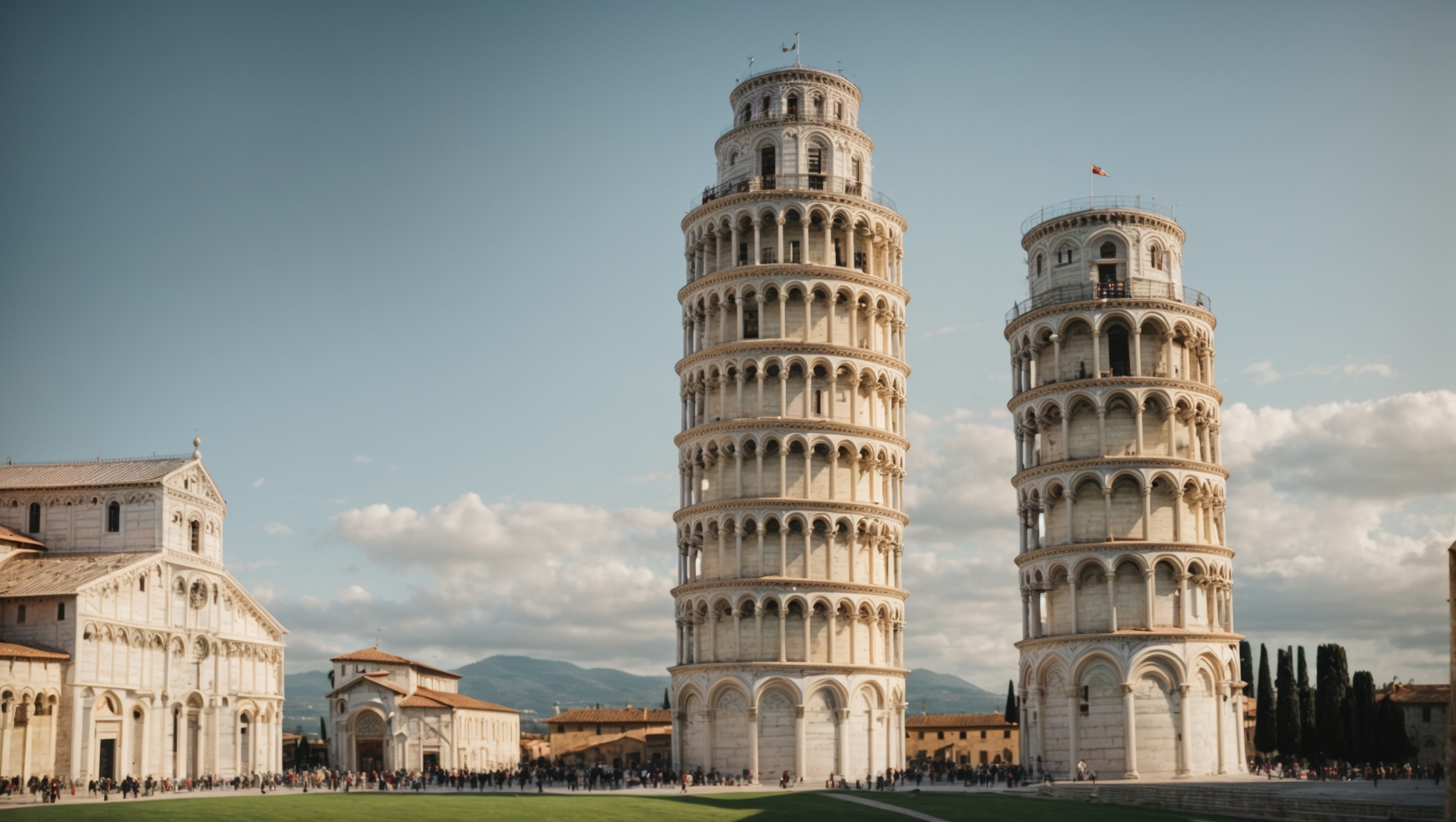
Unveiling the Mystery: The Leaning Tower of Pisa’s Architectural Enigma
Have you ever heard of a tower whose graceful lean captures the attention of the entire world? The Leaning Tower of Pisa is a famous building located in the center of Italy that has fascinated and perplexed both architects and visitors for centuries. A tribute to human ingenuity, engineering, and a little bit of unpredictability, this leaning masterpiece stands. Let’s set out on a quest to solve the Leaning Tower of Pisa’s fascinating architectural riddle.

1. The Birth of a Marvel: A Historical Overview
It took over 200 years to build the Leaning Tower of Pisa, or “La Torre Pendente di Pisa” in Italian. Its construction started in 1173 and continued despite several setbacks until it was finished in the middle of the fourteenth century. It was initially planned to be a free-standing bell tower for the cathedral in Pisa, but because of its unintentional tilt, it turned into a work of art.
2. The Perplexing Lean: Causes and Explanations
The tower’s lean, which defies both expectations for architecture and the laws of gravity, is among its most intriguing features. The base of the tower, which is composed of clay and soft soil, is to blame for the lean. Due of the uneven weight distribution during construction, the tower began to lean to one side. The tower’s famous tilt was the result of this unanticipated turn of events.
3. Engineering Marvel: Preventing the Topple
Over the years, efforts to prevent the tower from toppling have been both innovative and meticulous. Engineers and architects have worked diligently to stabilize the tower and reduce its lean, employing methods such as soil removal and counterweight placement. These efforts have successfully slowed down the rate of tilting, ensuring the tower’s safety and longevity.
4. Tourist Magnet: Global Attraction and Symbolism
Due to its distinctive tilt, the Leaning Tower of Pisa has become a universal representation of human progress and adaptability. Every year, millions of tourists travel to Pisa to experience this wonder firsthand. Many of them also take humorous perspective shots that play with the tower’s lean. Due to its popularity, it has become a universally recognized cultural icon.
5. Architectural Anomalies: Learning from Imperfections
Although the tilt of the tower is a flaw, it has also taught engineers and architects a vital lesson. It serves as a reminder that even in the field of architecture, unforeseen problems can inspire creative solutions. The tale of the Leaning Tower of Pisa shows us how embracing individuality and finding beauty in flaws can produce outstanding outcomes.

6. Cultural Significance: A Link to the Past
The Leaning Tower of Pisa is not only an architectural marvel; it also has cultural value. It represents a concrete link to Italy’s long history and serves as a reminder of the artistic and engineering prowess of the past. The tower’s presence in Pisa’s surroundings also stands for the tenacity of human endeavors over the course of millennia.
7. Preserving the Legacy: Conservation Efforts
The Leaning Tower of Pisa needs constant dedication to be preserved for future generations. Conservationists put in a lot of effort to keep the tower’s structural integrity while guaranteeing that the public can access it. The difficulty of maintaining the proper balance between preservation and tourism serves to emphasize the tower’s importance.
8. Architectural Inspiration: Influence on Modern Designs
The impact of the Leaning Tower of Pisa transcends its historical setting. The unusual shape of the building inspires architects and designers to experiment with leaning structures in contemporary architecture. This example of innovation demonstrates how an apparently “flawed” design may inspire creativity and reinterpret accepted architectural principles.
9. A Timeless Enigma: Continual Fascination
The Leaning Tower of Pisa’s appeal comes from both its intriguing past and its ongoing power to capture our imagination. We are reminded of the beauty that results from the unexpected as we look at its skewed form. This perplexing architectural structure nevertheless serves as a testament to the spirit of exploration and human tenacity.

Conclusion
Not only does the Leaning Tower of Pisa stand tall in terms of height, but also in terms of the collective human mind. Its history is motivating, its beauty enchants, and its tilt defies rationality. This architectural puzzle serves as a reminder that mistakes can lead to wonders and that the search for knowledge and originality knows no limitations.
FAQs (Frequently Asked Questions)
- Why does the Leaning Tower of Pisa lean? The tower leans due to its foundation on soft soil and clay, causing uneven weight distribution.
- Visits to the Leaning Tower of Pisa are safe, right? Yes, extensive efforts have been made to stabilize the tower, making it safe for visitors.
- Can you go inside the tower? Yes, visitors can climb the tower and enjoy breathtaking views from its top.
- How much has the tower leaned over the years? The tower has leaned at varying rates, but conservation efforts have reduced its tilt.
- What is the significance of the Leaning Tower of Pisa today? The tower serves as a global icon of human ingenuity and a symbol of embracing imperfections.