
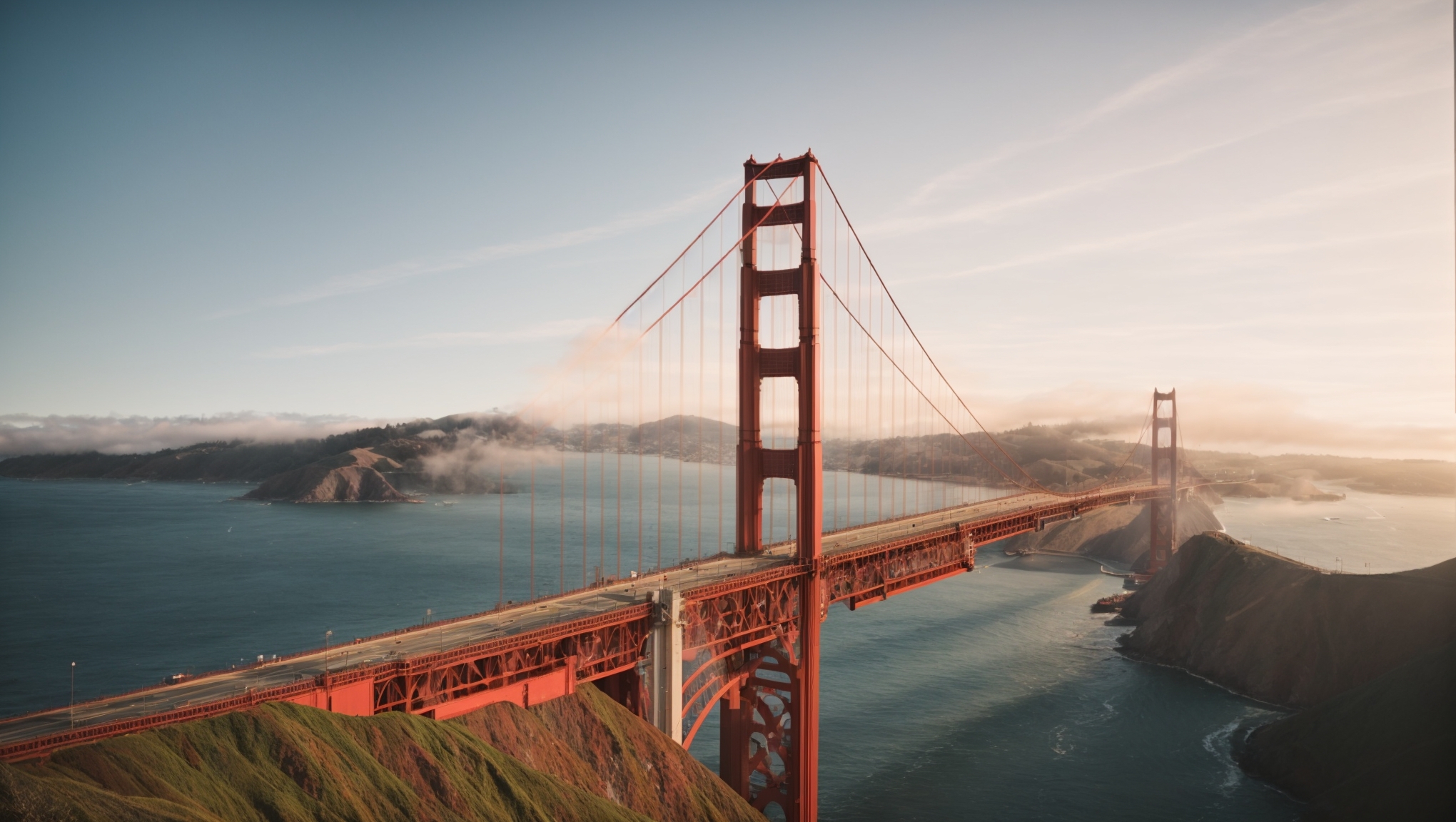
Stretching magnificently across the mouth of San Francisco Bay, the Golden Gate Bridge serves as a representation of creativity, aesthetics, and connectivity. This engineering masterpiece has won admirers’ hearts all across the world and is an everlasting example of human ingenuity. Let’s explore the Golden Gate Bridge’s fascinating past to learn more about its inception, building, and enduring significance.
Table of Contents
- Introduction
- The Vision and Conception
- Overcoming Engineering Challenges
- The Construction Saga
- Painting the ‘International Orange’
- Grand Opening and Immediate Impact
- Withstanding the Test of Time
- The Golden Gate Bridge in Popular Culture
- Recognitions and Preservation Efforts
- The Bridge’s Role in United States History
- The Bridge as a Tourist Magnet
- Legacy of Engineering Excellence
- Captivating Views and Photo Opportunities
- The Bridge’s Symbolic Significance
- Conclusion
1. Introduction
The Golden Gate Bridge, a masterpiece of contemporary engineering, is proof of human brilliance and tenacity. This bridge, which spans the renowned strait connecting the San Francisco Bay to the Pacific Ocean, has evolved beyond its original use to stand as a timeless representation of beauty and advancement.

2. The Vision and Conception
Skepticism greeted the plan to across the treacherous waters of the Golden Gate Strait at first. But in 1921, engineer Joseph Strauss put out a design for a bridge that combined cantilevering and suspension. Irving Morrow, an architect, developed his concept further and envisioned a bridge that would blend in with the surrounding environment.
3. Overcoming Engineering Challenges
There were several difficulties involved in building the Golden Gate Bridge, such as dangerous tides, severe winds, and the possibility of seismic activity. To get around these challenges, consulting engineers Leon Moisseiff and Charles Alton Ellis worked with chief engineer Joseph Strauss to come up with creative solutions.
4. The Construction Saga
In 1933, during the Great Depression, construction began. Thousands of people were employed by the project despite its financial difficulties. The major towers of the bridge were built utilizing an innovative technique called “suspension cantilevering,” which ensured worker safety while attaining astounding efficiency.
5. Painting the ‘International Orange’
The “International Orange” color of the bridge wasn’t only for show; it served a functional purpose as well. The color suited the natural tones in the area and helped to give visibility in San Francisco’s frequent fog.
6. Grand Opening and Immediate Impact
The public could cross the Golden Gate Bridge on May 27, 1937. Both the ceremony and the bridge themselves were magnificent. The bridge, which connected Marin County to San Francisco, had an instant revolutionary effect on the area, bringing up new development opportunities.
7. Withstanding the Test of Time
The engineering prowess of the Golden Gate Bridge’s design was made clear when it withstood the 1989 Loma Prieta earthquake. The safety and lifespan of the bridge have been guaranteed by ongoing maintenance and seismic retrofitting.
8. The Golden Gate Bridge in Popular Culture
Numerous movies, TV shows, and commercials have featured the bridge’s famous shape, making it a universal representation of San Francisco and the United States. One of the most known landmarks in the world, thanks to its media appearances.
9. Recognitions and Preservation Efforts
Designated a “Wonder of the Modern World” by the American Society of Civil Engineers, the bridge continues to receive accolades. Preservation efforts strive to maintain the bridge’s original character while adapting to modern demands.
10. The Bridge’s Role in United States History
The bridge has historical significance in addition to its architectural value because it contributed to developments in transportation and defense during World War II. It serves as a moving memorial to the nation’s development.

11. The Bridge as a Tourist Magnet
Every year, millions of people from all around the world visit the Golden Gate Bridge. A must-see location, it offers visitors accessible walks, stunning views, and visitor centers.
12. Legacy of Engineering Excellence
Future bridge designs have been impacted by the unique design and construction methods used on the Golden Gate Bridge. The ideals of effective engineering and aesthetic integration continue to carry on its legacy.
13. Captivating Views and Photo Opportunities
The Golden Gate Bridge provides breathtaking views of the Marin Headlands, Alcatraz Island, and the San Francisco skyline from various viewing points. Both tourists and photographers are treated to beautiful sights.
14. The Bridge’s Symbolic Significance
Beyond its obvious features, the bridge represents cooperation, advancement, and the resilience of the human spirit. It reminds us that we can cross actual and figurative gaps if we work hard enough.
15. Conclusion
The history of the Golden Gate Bridge is a narrative of big goals, tenacious work, and timeless beauty. It stands as a tribute to the heights of human achievement, having grown from its modest origins as an ambitious vision to its current standing as a global icon. The beauty of the bridge never fails to awe us and serve as a constant inspiration and motivational force.

FAQs (Frequently Asked Questions)
- Q: How long did it take to build the Golden Gate Bridge?
- A: Construction of the bridge spanned over four years, from 1933 to 1937.
- Q: What is the significance of the bridge’s distinctive orange color?
- A: The color provides visibility in San Francisco’s fog and has become an integral part of the bridge’s identity.
- Q: Can visitors walk across the Golden Gate Bridge?
- A: Yes, visitors can walk or bike across designated walkways, enjoying breathtaking views along the way.
- Q: How has the bridge contributed to popular culture?
- A: The bridge has appeared in numerous films, TV shows, and advertisements, solidifying its status as an iconic cultural symbol.
- Q: What recognition has the Golden Gate Bridge received?
- A: The bridge has been designated as a “Wonder of the Modern World” by the American Society of Civil Engineers.